
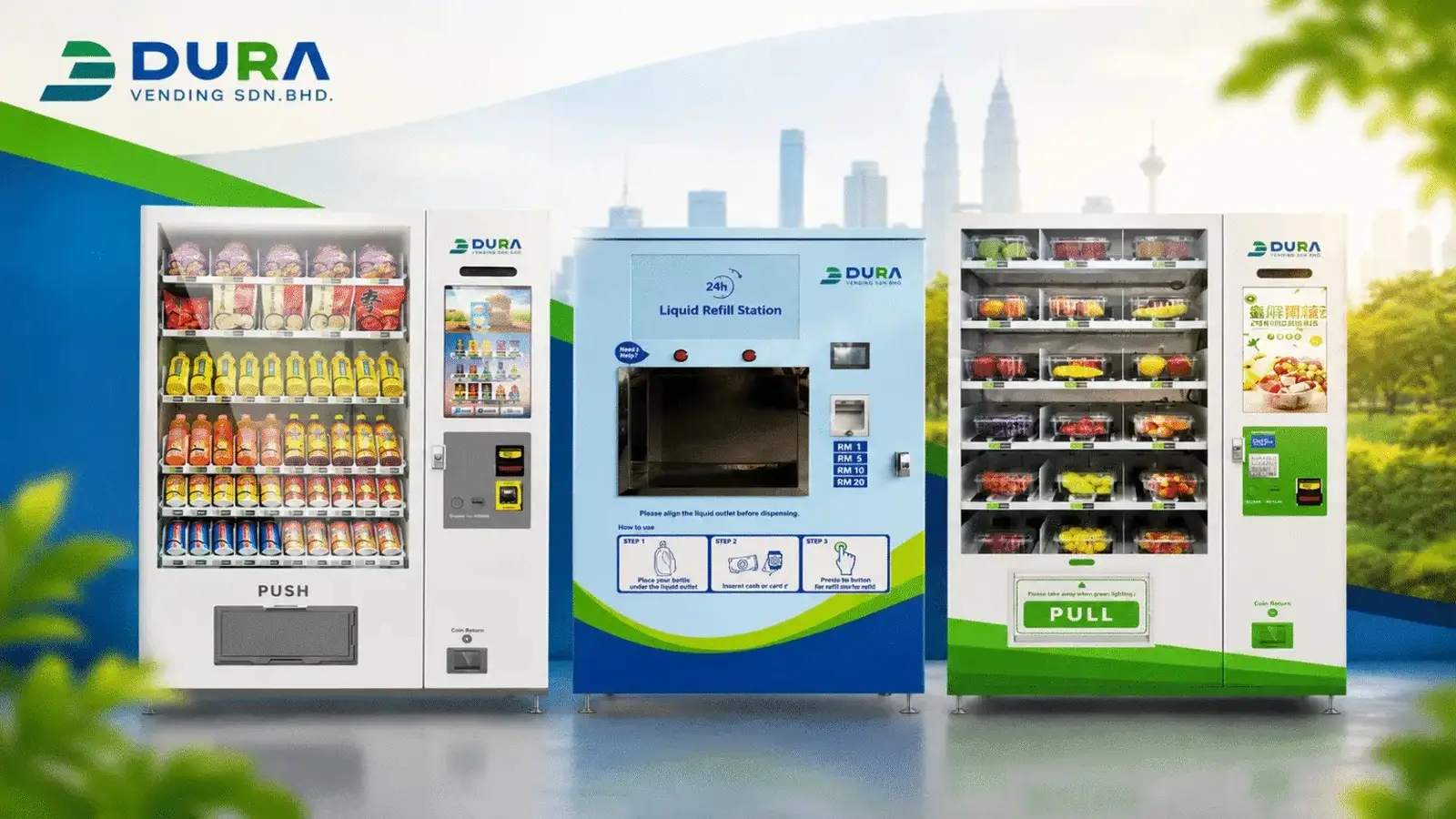
Thinking about how to start a vending machine business in Malaysia? You’re not alone — vending machines are having a moment right now. Walk into any mall, residential area, LRT station, or new condo lobby and you’ll spot one that wasn’t there a year ago. Fresh juice machines, perfume machines, even helmet cleaning stations. This isn’t a coincidence. Low overhead, no staff needed, and 24/7 sales are exactly what’s driving more Malaysians, from side-hustlers to serious investors, into vending right now.
The catch? Most people jump in with just a machine and no real plan, then wonder why sales are flat. If you want to actually make this work, here’s the step-by-step version of how to start — not the “quit your job and get rich passively” version you see in reels.
Is the vending machine business actually profitable in Malaysia?


Short answer: yes, if you treat it like a real business, not a set-and-forget ATM.
Profitability depends on three things: foot traffic at your location, product margins, and how often you restock (or don’t need to). A machine in a busy office building with 500 staff will always outperform the same machine in a quiet residential block, even if the second location “feels” more convenient to you.
Common margins in Malaysia:
- Drinks & snacks vending: moderate margins, high volume, needs frequent restocking
- Fresh juice machines: higher margin per cup, strong novelty factor, fewer competitors
- Detergent/sabun machines: steady repeat demand, solid margins, familiar to most consumers
- Perfume & helmet cleaning machines: lower transaction frequency but much higher margin per sale, and almost zero local competition
This is why more first-time operators in Malaysia are moving away from plain snack machines and into specialty or combo machines — the market isn’t saturated yet.
Step 1: Pick your machine type based on the location, not the other way around


This is the mistake almost everyone makes: they fall in love with a machine first, then go looking for a location to match. Flip it.
Ask what the location actually needs:
- Offices, condos, gyms → Combo Machine or an AI smart chiller
- Malls, campuses, event spaces → Fresh Orange Juice Machine
- Motorcycle-heavy areas (LRT stations, petrol stations, university areas) → Helmet Cleaning Machines
- Laundry , hostels, service apartments → Detergent Refill Machine/Sabun mesin
- Hotels, salons, malls → perfume vending machines
If you’re not sure yet, that’s normal — most operators only figure out their best-fit machine after seeing a few options side by side.
Step 2: Decide — buy or rent?
This is where most beginners get stuck, because “vending machine rental price” and “vending machine purchase price” in Malaysia can look wildly different depending on the supplier, and nobody explains the trade-off clearly.
Buying outright makes sense if you’re confident about the location and plan to run it for 2+ years — you own the asset, no monthly commitment, better long-term ROI.
Renting makes sense if you’re testing a new location, don’t want a large upfront cost, or want to see real sales data before committing. It’s also lower-risk if you’re running your first machine.
Either way, ask your supplier upfront:
- What’s included in the price — machine only, or installation + delivery too?
- Is there a minimum rental period?
- What happens if the machine breaks down — who pays for repairs?
That third question matters more than people realize, which brings us to the next step.
Step 3: Choose your supplier based on after-sales, not just the machine price


Here’s the part nobody tells you: the machine is the easy part. Keeping it running is the actual business.
A vending machine is a mechanical + electronic device. It will jam. It will need parts replaced. It will need software updates. If your supplier disappears after the sale, or takes two weeks to send a technician, that’s downtime — and downtime is lost revenue sitting right there doing nothing.
When comparing suppliers, ask:
- Do they have their own in-house technician team, or do they outsource repairs?
- Do they stock spare parts locally, or order from overseas when something breaks?
- Is the payment system (e-wallet, card, cash) built in-house or a third-party add-on?
This is also why some suppliers position themselves as a full-service partner rather than “just” a machine seller — because in this business, the partnership after the sale is what actually protects your income.
Step 4: Get the legal basics sorted
Nothing fancy here, but don’t skip it:
- Register your business with SSM (as a sole proprietorship, partnership, or Sdn Bhd depending on scale)
- Get location permission — written agreement with the building management, mall, or landlord for machine placement and electricity access
- Food/beverage machines may need additional halal or food handling compliance depending on the product
Step 5: Scout the location properly
A good vending location has:
- Consistent foot traffic (not just “sometimes busy”)
- Easy access to a power socket (this trips up more people than you’d expect)
- Visibility — not tucked behind a pillar where nobody walks past
- Low competition — check if there’s already a similar machine within sight
Pro tip: talk to the building management or shop owner about existing foot traffic data if they have it (mall management usually does). Don’t just eyeball it during one visit.
Step 6: Plan your restocking and monitoring routine
Even “low-maintenance” machines need a rhythm:
- High-frequency items (drinks, snacks, fresh juice) — restock every 2–4 days depending on volume
- Low-frequency items (detergent, helmet cleaning) — weekly or biweekly checks are usually enough
- Smart machines with remote monitoring let you check stock levels and sales data from your phone, so you’re not driving over just to “check”
If you’re running more than one machine, this is where smart/IoT-enabled machines start paying for themselves in saved time alone.
Common mistakes first-time vending operators make in Malaysia
- Choosing a location because it’s convenient for you, not because it has traffic
- Picking the cheapest machine without checking after-sales support — then paying more in downtime than they saved on price
- Not negotiating the landlord/management agreement in writing — verbal “can lah” agreements have a way of changing later
- Ignoring maintenance until something breaks — regular checks are cheaper than emergency repairs
- Starting with 5 machines at once instead of proving the model with 1–2 first
Starting a Vending Machine Business in Malaysia
Common questions about cost, profitability, licensing, and whether to rent or buy — answered straight, no fluff.
Costs vary widely by machine type — a basic drinks machine costs less than a smart combo or specialty machine like FRUVA or a perfume vendor. Renting lowers your upfront cost significantly compared to buying.
Yes, when the location has strong foot traffic and the machine type matches what people at that location actually want to buy. Specialty machines (juice, perfume, detergent, helmet cleaning) currently face less competition than standard snack machines.
You’ll need standard business registration (SSM) and written permission from the building or location owner. Food and beverage machines may require additional compliance depending on the product sold.
Rent if you’re testing a new location or want lower upfront risk. Buy if you’re confident in the location and plan to operate long-term — it’s more cost-effective over time.
Thinking about which machine fits your location best? Dura Vending‘s team can walk you through machine options, rental vs. purchase pricing, and what after-sales support actually looks like — no obligation, just a straight answer. Visit our showroom in Semenyih or drop us a message to get started.